Showing posts with label Current movies. Show all posts

Monday, June 4, 2018

"Solo", Farewell, Auf Viedersehen, Goodbye (or, All Our Yesterdays)


As an aforementioned first-generation fan from the Star Wars O.G. (1977, baby, Bicentennial behind us, Vader was lying, nobody dressed up in line, tickets were a buck-fifty and Han Shot First), it might seem strange to start off a piece about the recent box-office fate of "Solo: a Star Wars Story" with a Star Trek reference, but just go with me on this for a moment:

In one episode from the original 1960's Trek series, Captain Kirk, Mr. Spock and Dr. McCoy beam down onto a planet about to be destroyed, and into what seems to be a giant archive library of electronic disks. 
As the librarian, Mr. Atoz (get it?) explains, each disk is an encyclopedic entry on planetary history, and controls a time portal back to that period--And the reason no one else is there to meet them is that the entire planet has been evacuating the disaster by escaping back into the previous past era of their choice...Or, at least, that's all he has time to explain, before his own "gotta run!" exit leaves them just as confused as before.  It won't stop the planet's sun from going supernova, but at least everyone could now safely go somewhere where they can stall it off for a few hundred or thousand years and let it become somebody else's problem.

It's not as crazy science-fiction as it sounds.  In fact, too many of us seem to be doing it right this very moment.

----
The current headline that's left the movie industry reeling for the last ten days--in an oddly absent movie summer where every hit seems to be giving each other a wide berth and safely staying out of each other's way--was the rug-pulled no-show box-office opening for "Solo: a Star Wars Story", which opened to an all-time low of $90M on the usually sacred Memorial Day, dropping to an even more embarrassing $29M the second week.
Well, a Star Wars movie tanking at the box-office on launch, that-there's stuff that just shouldn't usually happen--Over the week in between, the industry scrambled for an explanation, with producer Kathleen Kennedy blaming bad weather and the holiday weekend.  (Which was a bit ironic, considering how Fox first tried to use Memorial Day to "bury" the 1977 Star Wars forty years ago, hoping everyone would be at the beach.)   
Some fans went the quick route, saying that while the movie had the screenwriter of "Empire Strikes Back" and a director who'd worked with George Lucas in the past, new actor Alden Ehrenreich was just too uncharismatic a lump to step into Harrison Ford's shoes.
Most core Star Wars fans, still reeling from the unholy self-indulgent train wreck of last December's "Episode VIII: the Last Jedi", were quick to grab writer-director Rian Johnson by the scruff of the neck, hold him up next to Kennedy's need to make the stories more "socially inclusive", and shout "It's THEIR fault for ruining the whole thing!"...Which is not, we should say, far off.

But critics were a little more incisive in their complaints:  Columnist Joshua Rothman for the New Yorker called the Solo movie "Distressingly forgettable...A Star Wars movie about Nothing, like a Seinfeld episode with hyperdrive".  Joe Morgenstern of the Wall Street Journal called it "Dramatic neutrality", where "Action of no great consequence grinds on". C
ritic A.O. Scott of the NY Times shrugged off the "Low-stakes blockbuster" fun, but called the story's need to backstory every unexplained reference from Eps. IV and V "A filmed Wikipedia page".
And it's Rothman's New Yorker column that seems to have nailed as many of the reasons as any:  The Star Wars universe felt "empty" with no one hero to follow anymore.  It was a setting of people, creatures, identifiable pop-lore references and occasionally battles, ones we expected from a big famous brand name, but nothing that took us anywhere anymore.  A wandering nobody with "no people" stumbled into scoundrel company, learned to pilot a ship, met two loyal sidekicks who figure in more important later stories, and became at the end of the movie...pretty much who he was at the start.  We know LATER that he'll go on to great things, but that's another movie.  And you wouldn't know that, of course, unless you'd seen them already.

The reason that it doesn't quite feel like an epic Star Wars saga may probably be because of the other big name we'd all heard forty years ago when the first movie opened.  Oh, we all heard about George Lucas...And if we were watching PBS stations on pledge drives for the next twenty years, we also heard about the philosophical author of the books Lucas claimed he had been inspired by:  Joseph Campbell.
In his book The Hero With a Thousand Faces, Campbell outlined how every mythic-saga hero in cultural history, from myth and fairytale to Beowulf, to King Arthur, to Frodo Baggins, to, well, Luke Skywalker, the hero's adventure is a life-changing journey that is like maturity itself: The hero starts from nothing, and must leave it or see it destroyed before he can search the world for what will make him complete--He will receive advice or even magical help from a fatherlike mentor steeped in ancient traditions, he will have sidekicks who may even be inspired to find their own selves by lending support, and, like Luke's final lightsaber duel, he has to overcome his own personal demons or failings and conquer them before he can be worthy of getting his prize.

In a 70's where cynical Clint Eastwood antiheroes had become the "relevant" norm, the Campbell-worship in Lucas's first Star Wars (it wasn't "Ep. IV" or "A New Hope" back then) was praised for its "Modern mythic" quality, and even accused of being a deliberate old-Hollywood throwback to the 30's-serial Flash Gordon days, when heroes were Heroes.
Without the Hero's Journey, and what he finds at the end of it, you do not have a Story.  I'm not exactly sure what you have--whether it's a diary, a tangential anecdote, or, as the NY critic said, a footnote analysis of somebody else's story--but it's simply not something you can apply the more familiar word to.  Unless you happen to be Atreyu or Falkor, there is no such thing as a Neverending Story.

And that's a problem for studios at the moment:  They were sort of counting the next years' strategies on stories not ending.  
Particularly after most of them did--Warner had the good fortune back at the beginning to luck onto multi-filmed serials of Harry Potter and Peter Jackson's "Lord of the Rings" adaptation, which were already in-production to deliver one film of the open-ended books' chapters per year.  And execs in 2001 now had the one-two punch of knowing exactly what money they would make in 2003 and 2004 before they'd even made it, a strategy they've applied ever since.  
A strategy they later believed in the 10's they were copying from Marvel's success with interconnected and serialized big and little movies all telling the "universe" of one big TV-series like story--Not realizing that Marvel was simply adapting what they'd written for fifty years:  Ongoing magazines meant to get you to buy the next issue, or story-crossover issues of another magazine.  What Marvel did, they did for a living.
Harry and Frodo were characters in the more traditional kinds of books, and as Joe reminded us, books end after the hero finds what he was looking for.  Studios (including Warner's original contract deal to write more Harry Potter stories without JK Rowling, even after there was no more Voldemort to fight) believed they could turn a story into a Brand Name, by telling us everything else that had happened.  And, if living Happily Ever After, or dying, happens to be the major stumbling block, everything else that happened, happened....before.  And to everybody else, whose stories were glossed over the first time around--Hey, ancient mentors and flawed sidekicks are people too, y'know!

Studios needed to promise the public More--Especially when it was looking more and more like they wouldn't be able to deliver it.  And fans, being of the right age when more hamburgers and more cookies sound better than Less of them, thought they wanted More. But in writing, More is not always Better...It's just more, like more paper clips on your desk, or more lint in your closet.  One of the first things your freshman writing teacher drilled into your ambitious high-school head was "Kill your darlings"--Not EVERYTHING you think up belongs in a story, and sometimes the hardest work in telling a story is in knowing what part of the story not to tell, and the narrative will be clearer to the reader for what you remove.  (A screenwriting concept Michael Bay and M. Night Shamalyan have apparently never heard of in their entire lives, but that's another issue.)
Think of any classic story:  Would Cinderella be a better tale if we had a lengthy flashback to when Cindy's parents were still alive, or if we saw what happened to the Stepmother's previous husband?   Would Robin Hood be a more compelling adventure if we saw the origin of how the Sheriff of Nottingham rose to power?  Would Hamlet be a more effective tragedy if we had a flashback of the close relationship he had with his dad when still alive and king, or if we followed the side adventures of Rosencrantz & Guildenstern?...Er, oops, wait, think someone's already written that play.
The narrative is clearer when we know the answers to the question the reader will ask...Who is the main character?  What does he want?  When does he start to go after it and how does he plan to do it?  And what are we to take away from the story in the end into our own experiences, that we'll care whether or not he finds it?

To tell the eight, nine, ten, or however ultimately-many chaptered story of Star Wars, you have to ask the same question the Prequel trilogies brought up:  Just who the heck's saga IS this, anyway?  Is it Luke's?  Is it Anakin's?  Is it both?--Is it about how Luke redeemed Anakin, or how Anakin was redeemed by Luke?  Is it the robots'?  Is it Obi-Wan's?  Is it Boba Fett's?  Or is it Solo's, who isn't even mentioned at all in the first three episodes?
And that question, Campbell already answered:  It is the saga of the hero we follow because he is Us.  He may have friends, he may have a mentor, and he may have help, but if the story was about them, we'd know it from the beginning, wouldn't we?

But instead, we think we want to come back to More Star Wars, whomever it's about, because, like Marvel or Pixar, a reputation-proven brandname is one of the last remaining safe-houses to come back to at the cineplex.  We feel nowadays as if we can't expect good new movies anymore, so keep the OLD good ones alive as long as we can.
Like Mr. Atoz's planetary library-patrons, we audiences have also become like those studios:  All the good old stories had endings, and good new ones seem to be less and less forthcoming every year.  So we evacuate to a Summer '18 with another story of Pixar's Incredibles, more adventures in a newer, bigger Jurassic Park, a new heist for a new Oceans '11 gang, and more thrills that remember how cool it was to go to a theater in 2004, 1993, and 2001.  Those were good years...But they're not 2018, 2019, or 2020, and they sure as heck aren't 2021 or 2022.
With only a brick wall at the end of the tunnel, the train speeding up, and studios seeking only movies the audience already knows by name and can identify--namely favorite old ones--the audience can only loop, re-loop, and re-re-loop itself into the favorite past of its choice, trying to survive in old movies when new movies can't deliver anymore, until it realizes a basic problem:  The past is not a future.  Saying "Here's another part of the story we forgot to tell you twenty years ago" is not going to stop an industry of Today from blowing up around their ears.

And the stories that Yesterday had to tell are just not all that interesting, when you're living in Today and know what the characters don't.  
It's just not that much fun to see a character who knows less about his own story than we already do.  If the hero has no new journey to go on, what will we ever find on ours?

Monday, June 26, 2017

We AREN'T the World? (or About "Last Knight"...)

There's a funny but not too well-known story from the 1001 Arabian Nights that I can't help noticing has been more and more on my mind of late...

The short version:
A poor merchant has one last chance to rescue his failing business, so he puts every last drachma he has into three fine glass jars he bought wholesale, and plans to sell them at the street market.  But he remains hopeful--"These three should sell easily by the end of the day," he tells himself.  "And I'll be able to turn enough profit to buy six to sell the next week, and ten the week after that, as I expand my trade.  Soon, I'll have cleared enough profit to switch my business from glass jars to rare jewels, and become the richest jeweler in the city market.  Word of my success will spread among the gem traders, and soon reach the ear of the grand vizier himself, as I arrive at his palace on my fine horse, and present him with diamonds, to ask for his beautiful daughter's hand!
"And after we're married, we'll build a huge palace in the desert, with a hundred servants, and my new wife will have the finest room, and the most gorgeous fashions!  But soon, she will come to me and say 'All you care about is your business, you never pay attention to me anymore, how can you neglect me so?'...But I will only be rich, proud and haughty, and ignore a single word she says.  She will go to her mother, and her mother will come to me and say 'How can you treat my daughter so shamefully?', but I will only refuse to listen, and have the servants send her away.  Finally, my new wife will come to me in tears and say, 'I can't take it anymore, this palace is a prison for me, I'm going home to my mother!'...But in my arrogant pride, I will grow angry at her foolishness, and send her to the floor with a kick, like this!"
Without realizing, he demonstrates by kicking the table, knocking it over and shattering all three glass jars.  And the merchant now realizes he has nothing to sell on day one, before he's even opened his stand. 
A tailor in the next market stall sees this, and laughs, "Serves you right, for treating her like that!"

----
It's a funny story.  It's whatcha call "World culture".

Lately, this summer, we've been seeing not only a lot of building imaginary trading empires and palaces in the desert--and dreams of someday getting the chance to act like a powerfully rich, influential jerk--but a lot of interest in our international neighbors overseas, and their cultures.
Y'see, seems there's one exotic thing the folks do in Asia that teases, tantalizes, and mystifies us folk here on the Western hemisphere, with its golden Marco Polo secrets of the East:  They apparently like going to see big-studio blockbuster movies.  Even when said movies might happen to be crap.  And more importantly, even when US audiences don't, in their mass opinion that the movies actually are crap.
And it's been starting to give a little too much aid and comfort to the people here on our shores that MAKE crap movies, and cause them to, well, dream a bit too much and too far ahead for their own good.

Let's flash back a year:  Remember that long-ago Summer of '16?  Remember the "Trump rallies" of DC fans, who didn't like being told that no audiences besides themselves went to see "Batman v. Superman: Dawn of Justice" ("But it made $500M!"), and that "Suicide Squad" didn't exactly rescue the brand name six months later either?

That was the summer of "Lugen-criticsse!", as the fans tried to start demonizing the image of RottenTomatoes movie critics who had mostly, um, panned the two movies, as members of an "Outdated" profession, as "Elitist" meanies who just didn't like seeing Joe Idiot have fun on a Friday night, and asking whether they still had a role in our new interactive social media, where we can decide our movies for ourselves?  The problem is, a majority of moviegoers outside of the never-say-die-hard fan niche were thinking for themselves, and ultimately agreed with the critics:  Yes, the two movies might have been crap.
But since, to the desperate and faithful, Numbers Didn't Lie, the box office figures would always be inflated to include the "Worldwide" B.O. numbers, and all of a sudden, the issue of Batman v. Superman only making a paltry third of what its overseas numbers made was now something you could brag about to "almost a billion!"

But, see, even before the summer of comic-fan movies, the desperate "Box office numbers = Quality" fan argument of "But it doesn't matter if you didn't like it, it must be good out there, because it made $300M!", already had a name.
It was dismissed by other fans as "the Transformers Fallacy".  And few were arguing that THOSE frustratingly "critic-proof" movies might happen to be crap, once you actually got inside the theater and watched them.

The idea that World numbers were always bigger than US numbers was not a new idea--Disney had started the craze for discovering it after finding out that US audiences might have dropped Pirates of the Caribbean 4: On Stranger Tides like a cold potato, but that it had gone on to gross a "billion dollars!" in European and Asian sales.  Back then, they didn't exactly go around mentioning that little detail, and the discrepancy puzzled the rest of us over here who'd actually seen it--Er, wait, hadn't the movie done a quick two-week disappearance from our local cineplex, or are we just not remembering it correctly?

An even bigger difference between box office numbers hit the industry headlines this past weekend, after Paramount's Transformers 5: the Last Knight opened with an unexpected all-time franchise domestic US box-office low of $60M, while the numbers from its China opening brought in $175M.  And Paramount executives, faced with the choice of either telling us their movie had opened with an embarrassing $60M or a whopping $175M, took the obvious choice.
But something was a little different this time:  The fact that the "success" came from China wasn't exactly hidden in the headlines the way Disney had hidden it.  China's BO numbers were splashed on Variety on Sunday literally right next to the US box-office figures, as if that was the "Other half" of our new mentality for considering movie success.  Critics had uniformly savaged the movie as "Messy" and "Incomprehensible gibberish" (something about our human heroes now descended from Camelot, and a new villainess-Transformer, suspiciously resembling a certain Egyptian mummy), and core fans tried their old standby rally that its 15%-and-dropping critics' score on Rotten Tomatoes was the work of "elitist meanies". 
That discussion, however, was now in the minority--The new discussion in town was whether it was "Selfish" or "Nationalistically short-sighted" to say that the movie had flopped in the good ol' US & A, when everyone knew how much foreign moviegoers had loved it...Shouldn't we start paying more attention to Overseas box office as the new reality of the movie industry?  Is China, with its billion CGI-hungry moviegoers, the new Hollywood?
Well, there's a couple problems with that.  Obvious one first:

Yeah, China's hungry for movies, all right...One might even say "Starving".  And a starving man doesn't care whether he gets a six-course steak dinner or a Denny's Grand-Slam breakfast.
The reason dates back to the Big Red Elephant in the Room, namely the reason why nobody's so concerned about Tokyo or Seoul's box office in compiling Asian figures:  
In China, the State's Communist control of the industry has a very tight say on what movies get made, and which movies are shown.  The masses, for their own good, are not to be shown criticisms of the government, the policies of Western countries, decadent or "deviant" depiction of sex, religious stories, or any emphasis that supernatural forces, like ghost stories, might still be possible in our modern scientific world...Y'know, all the good things that make movies worthwhile.  It was the reason Sony suddenly found themselves banned from China when the '16 Ghostbusters fought ghosts in NYC, and why Warner's Suicide Squad had their invitation revoked after the villain was possessed by the spirit of an ancient sorceress.
So what DO they make movies out of?  Well, all that pretty much leaves on the table for Generic Politically-Uncommitted State-Approved Entertainment are:
1) Romantic comedies, where shy squeaky-clean working folk and poor office Cinderella-girls meet-cute in the most unexpected and heterosexual places, and become new benefits to society as they realize their dreams, 
2) Over-the-top fantasies that take place in no geographically identified location, and usually involve the Monkey King, and 
3) Big-budget epics, particularly if they depict one of the Dynasty battles of the glorious empire in its ancient days.  
The latter is one of the reason we got this year's earlier Matt Damon mess of The Great Wall, when Chinese ideas of What Makes a Good Movie clashed with good old American opportunistic greed to let them make one.  In fact, when the new "Hollywood Silk Road" was opened last year with Warcraft, the joke among moviegoers was "No wonder they liked it..."
The other reason, of course, is that a fantasy movie with big explosions and CGI creatures translates well in any language, without the need for too much dialogue, cultural explanations, or thinking.  Beijing audiences unused to life in the West would find it easier to understand Johnny Depp's character in "Pirates of the Caribbean", or the dogs in "Secret Life of Pets", than, say, Michael Fassbender's character in "Steve Jobs".

And there's a bigger problem, and it has a little more to do with that story.
A string of surprise big-budget flops this summer has the studios more than simply just a bit rattled:  All four of the most high-profile box-office busts of May and June were meant to be the flagships for studios' new "House brand" franchises, and pave the way not for just a quick summer, but for a five-year strategy of interconnected sequels, spinoffs and "Crossover Universes".  Universal's The Mummy would have led Tom Cruise to the new "Dark Universe", Warner would have brought us new adventures for their gritty "re-imagined" King Arthur, and Disney's Pirates of the Caribbean: Dead Men Tell No Tales was going to be the first in Capt. Jack Sparrow's "Final Adventure Trilogy", as not one but three movies over three summers would wrap up the saga.  And news bulletin:  That suddenly didn't seem likely to happen.
Paramount also had hopes for the Transformers--The franchise had been getting diminishing returns, and even director Michael Bay had begun talking about hanging up his pot brownies and letting someone else take over.  But since Paramount needed a "Universe" to compete with Disney's Marvel and Star Wars, and Warner's DC Universe--and Universal's monsters, just in case--the studio had always had plans for a "Hasbro Universe", especially if it involved lots of space robots with whizzing gears in it.  Paramount's first attempt at a Trans-friendly Hasbro movie, 2012's Battleship, where J-5 tried to sink an alien spacecraft, was a crushing, incoherent, laughably baldface-derivative flop, and Paramount reigned in its strategy of filming Hasbro board games somewhat.  A few earthbound projects--like a Candyland movie, a non-comic reboot of Clue without Tim Curry, and the movies that became '14's Ouija and '15's Jem & the Holograms for other producers--were sold off or dropped, and Paramount was now only interested in space and action-themed Hasbro properties, developing 70's toys ROM: the Space Knight and the Micronauts, and 80's toys M.A.S.K. and the Visionaries  for future projects.  After all, if they're in space, you know who they'll meet.  Why, the M.A.S.K. team might even meet up with the GI Joe force, for one more movie.

But what happens if audiences say no, to the budget-busting tune of $60M?  Like they said no to Tom Cruise meeting Dr. Jekyll, or to Johnny Depp reminding us how just how damn long he's been saying "savvy"?  What if the chemical factory was shut down the day before it opened?
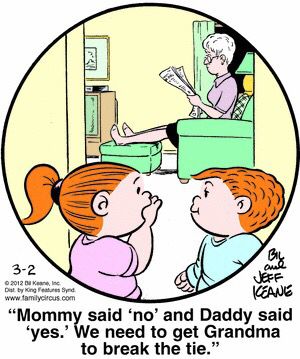
Well, let's be honest, any three-year-old knows the answer to that one.  If Mommy says no, go ask Grandma...She'll ALWAYS say yes.  And then when Mommy says she said no, tell her she's in the minority, and that she's just been officially outvoted by someone who already said yes, so there.  And then Mommy will be afraid to argue with the implied overhead authority of her mommy.
It's a natural reaction for someone who's just seen the next five rich years of their life go up in smoke over literally a weekend, and in Hollywood studios, the three-year-old never grows up.  The discussion of why it "doesn't matter" if US audiences said they didn't have the slightest interest in a Hasbro Universe, let alone the upcoming solo movie for Transformer's Bumblebee character (who is made to be a central plot point in T5 to prime the franchise-strategy pump), turned to discussions of the "New reality" of the industry, and the "Unstoppable new market force" of overseas audiences--I.e.. that Hollywood will just now have to GET USED to the idea of making their movies for Beijing and not Hollywood, so there.  And if we don't like it, we all just got 175 million reasons why we can lump it.

Should that worry us?  Yes.  And not because it's encouraging rich corporate execs in their fifties to employ the negotiation strategies of their three-year-old granddaughters.
And not because of complacent American "Aww, we used to be the big Uncle-Sam bully on the block and now we're not anymore!" jingoism, but because of a little thing that happens when you start selling diamonds you don't have instead of glass jars that you do--It's one of the first or second mass delusions that happens when a Bubble is on the horizon.
Now, we've discussed Bubbles before--They always start when there's a Mysterious New Market no one understands, but seems a virgin gold mine ripe for the picking...And then once a few lucky gold strikes happen, the rush...And then, ultimately, the SOCIAL THEORIZING why this new gold mine is the wave of the future, and why science doesn't lie, and why you just shouldn't put your money anywhere else if you know what's good for you.  And that anyone who tells you the lack of logical reasoning is "crazy" is just jealously stuck in the past and wishes he could get in on the gravy.  And then, something always happens that nobody exactly, um, planned for.
I'm not going to be the futurist who says what that might be. I'll just point out China's bad habit of finding a popular import, and for the State industries to find a new alternative they can whip up by themselves to profit off of, so that they don't have to rely on or pay out money to those barbarian foreign imports anymore.  It's a little something that corporations can call "Chinese loyalty".  
And it's not the most reliable basket to put all your eggs in for the next ten years, especially if you're going to start burning hyper-defensively divisive bridges with what used to be the most reliable source.  Like the shouts that once greeted Jane Fonda in Vietnam, moviegoers are starting to react to this weekend's "It's a new market now!" claims--and the trying to make their vocal opinions of What's Crap and What Isn't into quaint, obsolete persona non grata--with the very specific reaction of "Hollywood, love America or LEAVE it."

We've seen studios try to build five-year franchise strategies, and we're starting to see them put up a good fight when the audience won't let them.
But let them get too far ahead into their dreams where their new future unbuilt riches allow them to act like arrogant jerks, and all they may soon hear is broken glass on Monday morning.
And bit of mocking laughter from the bystanders nearby.

Monday, June 12, 2017

The Implosion of the Universe, or Here There (won't) Be Monsters

...Would it be too much of a cliche' to talk about "Putting the cart before the horse"?

Okay, then maybe we should try the exchange between Groucho and Chico Marx from Horsefeathers:
 C:  You know what I do when I kidnap somebody?  First I call them on the telephone, and then I send over my chauffeur.
G:  Oh, you've got a chauffeur?  What kind of car have you got?
C:  I no got a car, I just got a chauffeur.  
G:  Well, maybe I'm crazy, but when you have a chauffeur, aren't you supposed to have a car?
C:  I had one, but y'see, it cost too much money to keep a chauffeur and a car, so I sold the car.
G:  Shows you how little I know, I would have kept the car and sold the chauffeur.
C:  That's-a no good, I got to have a chauffeur to take me to work in the morning.
G:  But if you've got no car, how can he take you to work?
C:  He don't have to take me to work, I no got a job.

This past June 9-12 weekend, readers of box-office news on Sunday saw two interconnected headlines blast their bold unexpected shock across the banners of industry papers:
One was that, surprise, Warner/DC's lone pattern-breaking "good" movie, Patty Jenkins' Wonder Woman, had passed the same unexpected word-of-mouth audience test that Disney/Marvel's Guardians of the Galaxy Vol. 2 had passed last month, and taken $55M in a second #1 box office weekend.  The reader may theorize for himself why a jaw-dropped industry considered that a "surprise".
The second headline, to emphasize the first, was the presumable look on Universal's face, when Tom Cruise, blockbuster CGI effects, a full year of pre-release hype, a summer June opening and an audience-identified cultural property to be big-budget rebooted, left the studio stuck at the gate without transportation.  The latest 2017 reboot of The Mummy, meant to be Universal's new "House brand" to compete with all those apes-and-capes at Warner, Fox and Disney, took in a mournful $32M in its opening weekend (compared to Dreamworks' epic "Captain Underpants" taking in a third-place $15M in its second weekend).  

Well, c'est la guerre en la cine'.  It was rather a bigger problem for Universal, however, in that the selling point of the movie--even more than its A-list star or its monster--was that there were going to be MORE movies immediately in the pipeline after it.  A house brand that would reawaken the 30's Boris Karloff and Bela Lugosi monsters of the studio's proud heritage, and reboot them into a new world where all the characters happened to know each other, and presumably, would start to fight each other, in some future group film a few titles down the line.
What, you didn't know that?  It's okay, the studio wanted to make sure we knew about their newly named "Dark Universe"*, and told us about it.  In the final-release trailer, no less:

(* - "Wait, wouldn't 'MonsterVerse' have been more Universal-y?"  Yes, but Warner had already copyrighted the name, for their plans for Kong of Skull Island to fight Godzilla, and have Pacific Rim's Jaegers break up the scuffle.)

The "Too long, didn't watch" version:  Tom Cruise is a special-ops soldier in the Middle East.  (And not Vietnam, like in Kong:Skull Island) He digs up the ruins of Ms. Four-Eyes, survives a plane crash, and is told by Dr. Henry Jekyll--yes--as played by Russell Crowe, that his role/encounter has corrupted him with Engrams Monster Cooties, and he is now one of the unkillable few whose destiny is to Bust Monsters.  And we know the good Doctor likes classic monsters, because he quotes Dr. Praetorius's "Gods and monsters" line from the '35 Bride of Frankenstein!  Crowe, we discover, is part of this said league of extraordinary avenger-friends of justice, "Prodigium", and we are intended to soon discover that a certain Professor Van Helsing once belonged to this organization too.  But first, we've got to deal with, and protect a CGI-destroyed London from, a supernatural-powered female Mummy and her minions, which Cruise is now indestructible enough to fight, no matter how much you bang and toss him around like a rag doll.  Which is likely what Cruise's own Scientology also causes him to believe about himself offscreen, so, no biggie.
And why is Ahmanet female?--Oh, c'mon, why was the T-X Terminator female in "Terminator 3: Rise of the Machines", figure it out!  And the first person to point out that the reason Ahmanet is a female mummy is that "she's not a daddy Mummy!" gets hit.

Now, maybe I'm misremembering the 1932 Boris Karloff movie, a tad:
In that one, archeologists dig up the ancient Egyptian mummy of Imhotep, who secretly turns out to be not quite as stiff as they thought--And are soon met by the sinister and suspiciously wrinkled "Egyptologist" Ardath Bey, who takes an unhealthy interest in our heroine, believing her to be a reincarnated Egyptian queen.  No prize for guessing why.
(Yeah, all that stuff with Kharis, the lumbering guy in bandages?  Didn't happen until Universal's reboot of their monster brands for more quick, commercial B-movies in the 40's and 50's.)

But, y'see, this one isn't Karloff.  It's FRANCHISES.  Universal Studios had one thing in their attic trunk that Warner and Disney didn't--Okay, if you don't count the little yellow pill-creatures, or Vin Diesel & Dwayne Johnson.
So it doesn't matter if you don't get the original movie right--a problem that was already a bit noticeable with franchise-ready reboots of King Kong or The Magnificent Seven--so long as you Remember the Name.  And then you can make up whatever crap you want, so long as you don't change THE NAME.
And what if the audience does remember the historic studio property name a little better, and doesn't quite take to the new changes, or, in the worst scenario, considers the studio a raving lunatic for making those changes?  Um...poopie.  But hey, at least be glad they remembered.

Thing is, this isn't the first time it's happened, either.  Universal now considering the M-word as a license for wild chases and CGI insect/sandstorm effects was meant to follow in the footsteps of their "franchise" created by the goofy 1999 movie with Brendan Fraser.  And how did we happen to get that variation on Karloff?  As usual, it's a long story.  Oddly, as has also so often happened in American history, it turns out to be Forrest Gump's fault:
In 1994, twenty-three years before CGI effects could bring Peter Cushing back from the grave, Hollywood was astounded at how well computer effects and voice impersonation could create the illusion of Tom Hanks shaking hands with JFK in black-and-white 60's news footage.  And, as usual--and as they also did after Cushing and "Rogue One"--once Hollywood had a new toy that would let computers replace expensive actors, the industry started talking about "Virtually-resurrected" celebrities, bringing back dead stars to surprise us with new roles.
Plans to bring George Burns back in a new comedy never quite came to fruition, and John Wayne came back to plug soft drinks in angrily debated commercials, but Universal, the House of Frankenstein, had bigger ambitions:  What about bringing back the very Boris Karloff and Lon Chaney Jr., for a rematch of Frankenstein vs. the Wolf Man?  (Uh, technically, it was Bela Lugosi who fought Lon Chaney in the 1943 "Meets" movie, and Glenn Strange who met Abbott & Costello after that, but y'know, we can fix that and do it bigger this time, because we've got computers, 'n stuff.)

And, armed with their new whalebone harpoon, the studio now had its Ahab Complex of destiny:  Every "Legacy" horror movie of their beloved 30's creations that Universal released since 1994 bore the ulterior motives of trying to "test the waters" for whether the audience was ready to have Frankenstein and Dracula back in their theaters again, and justifying those expense accounts for the slightly dead Karloff and Chaney.
The '99 Mummy was a hit?  Yay, we can do it!
The '98 Gus Van Sant shot-for-shot remake of Hitchcock's Psycho was a flop?  Boo, we'd better not.
The '01 Mummy Returns was a hit again?  Yay, we can do it!
The '04 Van Helsing, with Hugh Jackman fighting every monster you could name, tanked epically?  Boo, we'd better not.
And so on.  And so on.  Even the '10 Benecio Del Toro remake of The Wolf Man was meant to hint about whether we'd want the Creature From the Black Lagoon to resurface soon.  As it ultimately turned out, the answer was no--When asked how they felt about resurrected Universal Legacy monsters, the audience, rushing out to buy the 30's originals on restored Blu-ray, routinely replied that they had to pee.  Boo, the studio had better not.

But that was just for license sales and bragging rights.  Now, in 21st-century 10's Hollywood, Frankenstein and the Wolf Man have a NEW battle to fight for the studios:  Crossover franchise universes.
Now, if you're not Marvel Studios working for Disney, or DC Comics working for Warner, you  may not quite know what they are, but that you have to make one if you want to stay in the game.  The other guys, after all, made it look easy--Just make a half-dozen solo movies for each pop-culturally recognized character, and spend time in the script where they explain their origins and search out to meet each other, so they can all have a common grudge to fight in the group film.  Of course, if Mary Shelley had never met Bram Stoker or Robert Louis Stevenson, and couldn't imagine a scenario where Henry Jekyll helps Prof. Van Helsing stop Dr. Frankenstein's Creature, that's what screenwriters are paid for.
And Universal certainly had their road map in mind.  Next up, a remake of The Bride of Frankenstein, with Javier Bardem as the groom, which would have put Prodigium aside in the story for the moment to focus on an "allegory of awakening" for the demographically female-identifiable Bride, as she fights to establish her identity against the controlling Doctor.  "Oh, sort of like that 80's movie with Jennifer Beals and Sting, you mean?"  Well, yes.  Publicity did rather hint that they'd seen that movie on HBO, too, and were using it as a template.
And then?  A new reboot of Van Helsing--"Wait, y'mean the one that tanked?"  Well, yes.  The one that tanked back then, because it wasn't part of the bigger story.  Only he's not working for the Vatican anymore, now he's working for the ancient order that later became--okay, you get the idea now?
Oh, and their 2014 Maleficent-envying "Dracula Untold" that was "supposed" to be part of a new franchise strategy?  Well, er, that sort of doesn't count anymore.  That one got out a bit early, before the real plans were in place.  Don't worry, they had it in mind to fit him in again somewhere.

It was a brilliant plan.  Everything was in place.  The movies were even granted their "existence" by a slate of release dates up through 2019-20, which would certainly give them enough time to actually make the movies by then. Was anything missing?  Why, yes, as a matter of fact.  
Turn your ear to those theater seats, and hear that booming neigh of "Ohh, Willl-burrr, remember us?  We're the AUDIENCE!"  And without them, your five-year franchise-universe strategy isn't going anywhere.
"But it made $175 million worldwide!"  Then go to China, where you can be loved.  Because over here, Universal, in the good old U.S. and A, you just had the year's biggest flopola since King Arthur grew up on the dirty streets of Camelot with his Round Table Posse, or Captain Jack Sparrow metaphorically had the Giant Fork of Neptune stuck into him...Or were you too busy looking at Shanghai numbers to notice?  And we've still got two more months of the summer to go.

If Universal built it, why didn't they come?  Tom Cruise might be a reason, and we can't honestly say he wasn't.  He's certainly taking the majority of the blame at the moment, because execs always find it easier to blame actors for why a movie doesn't find love.  Actors, after all, are easier to fire than studio execs.  And then, of course, it might be all those nasty-wasty critics, at that meanie-ol'-poopiehead RottenTomatoes, who all hated to see regular dumb-people have fun, and decided to be mean and gang up on it with a 16% score...It's Orwellian group-think!
A better question to ask is, why didn't the audience LIKE the idea of being told that they had to see this $15 movie-night-out solely for the purpose of seeing six more of them later on?--And being told TO THEIR FACE that they would do so solely because of that.  After all, didn't they all go see Marvel's Avengers, and come back for all those Harry Potter stories?  Aren't the kids into that "binge-TV" thing, where they like unfinished chapters and chapters of a story all at once?
Here's one answer to learn from the experience that you might be seeking, Universal.  It's a lesson that Warner's already learning with a certain big ape whom they want to fight a big lizard three years from now:  Don't try to tell the audience what they "know".  We've been doing it for a lot longer than you have.  And we don't have to keep you in business if we don't want to.
Treat us like gullible idiots who, in your imaginations, act exactly like numbers on a spreadsheet, and you'll find out exactly how much we DO know.  Think that you've made six films before the first one opens, and you're going to forget just exactly how hard it is for that first one to open on Friday night.

And that's good advice on the propelling of franchises you can take, straight from the horse's mouth.

Saturday, May 6, 2017

The Capes of Wrath?


Today, Saturday, May 6, if you may or may not be aware unless you've happened to be on the Internet or at your local comic-book store, is National Free Comic-Book Day.  A day set aside by the print-store industry to help promote fun reading for kids, even as the comic industry itself is facing danger from its own online-downloadable versions.
More to the geek point, it's the sought-after first-May movie weekend that Marvel Studios wanted to starting pistol the opening of Summer Movie 2017, with their big tentpole rollout for "Guardians of the Galaxy Vol. 2".  (And just as Marvel's big opener was one of the sole standout bright commercial spots of last year's season, let's try and have a better summer this year, shall we?  That last one was pretty painful.)
And with the traditional coming of May and November movie seasons, with the coming of big Warner, Fox and Disney/Marvel franchise tentpoles, comes that other new tradition, like the swallows at Capistrano:  Moviegoers wanting to vent their spleen at the current franchise-ridden Hollywood saying "All Hollywood makes is comic-book movies!  Have they run out of ideas?  Can't they make anything else?"


Yes, folks, let it out.  Here, I'll give ten seconds for the smug reader to let out his own primal screams searching for frustrated-moviegoer sympathy:
....
Okay, good.  Can we move on now?  (Guardians 2 is actually a pretty good movie, y'know.)

But to search for the root of our anger, we must have to come to grips with the fact that it might be MISPLACED...Stop and think for a moment, what are we trying to convince the world we're angry at?  Who are we pitching cabbages at, as they're being dragged to the guillotine in a tumbrel cart for their crimes against the citizens?:
An overexploited trend?  The story-similarity of genre formula for a standard origin-vs. villain plot?  The belief that studios are, quote, "desperate" to dig up lesser-known heroes who non-fans might not know off the tip of their tongue and now, quote, "throwing any old thing at us for money", unquote?  
Or just the general audience/industry malaise of 10's studios now searching for franchises in place of stories, as an easy road to make movies five years ahead of time?

That's okay, folks.  It's not a bad idea to think like that sometimes.  It's just bad to pat yourself on your martyred back and think that you're the first generation who ever had such frustrations.  
It's happened before, you know.  But to explain how, we're going to have to back a few years and look at another movie genre that ran its "gold rush" into the ground with audiences, and move slightly off the topic of National Comic Book Day:  90's animated films.
Twenty years ago, we thought there was no...STOPPING them.
---

Douglas Adams, in one of his Hitchhiker's Guide to the Galaxy books, quipped that all of man's innovations, over the history of civilization, tend to follow the same pattern:
First a problem, then a solution, then the know-how to control the solution, the solution becomes commonplace, and we soon instinctively start developing brand-loyalty preferences about thinking which solution happens to be better than the other--We find ourselves hungry, we have an urge to eat, we learn to grow our own food, restaurants begin popping up in every city, we feel like a bit of lunch and think, "Which restaurant has the best salad?"

The same pattern is at work when a new studio takes the time and effort to use their own specialized talent to create something new in the movies, cleans up, and starts the proverbial New Trend.
A studio with a different idea "solves" a problem we never realized we had at the theaters before, they display the know-how to tell the unique story, and when every other studio thinks they've found a license to print money, we enjoy the generic glut of riches for a while, until it slowly begins to dawn on us...some of the other studios away from the original prime source actually sort of stink at it.  And then, the problem in the audience's mind becomes the Plague of Imitators that has to be stopped, so that the "good people" can continue their own specialized work uninterrupted.

In the 1980's, Disney had their own problem trying to make family animated movies relevant again, and distinguish their history away from a market that now believed the industry was for selling the Care Bears.  In 1989, a new generation of re-dedicated folk gave us "The Little Mermaid", and all of a sudden, the image of the G-rated kids-animated musical clicked seamlessly into place.  '91's "Beauty & the Beast" caught the wave of adults looking for alibis to claim why they enjoyed going to see them in the theater (it's Oscar nominated!  It's the New Broadway!), and every studio now saw that forming their own animated studio was a foot in the door for a nice big validated audience demographic and a brand image away from that other big one with the Mouse and the Castle.  
EVERY studio.  Because every studio wanted that image.  And besides, how hard could it be?

That was the problem:  The prime source was so good at it, and was coming off of a proud fifty-year legacy of trying to be good at it, they made it look Easy.  And nothing raises the hopes of an imitator than the idea that they won't have to do much of that nasty hard work to get the exact same identical results.
While Disney continued the "90's Renaissance" bringing back the genre with Aladdin and The Lion King, we also had the decade of the "90's Wannabe", the third-party imitator that believed all they needed was a villain, the right songs, a wacky sidekick, and some message about Believing In Yourself, and that Best Song Oscar was as good as yours.
Ferngully.  The Pagemaster.  The Swan Princess.  Dare I mention that '99 Warner animated version of "The King & I", or do we get the point?
For a while, we never even suspected it might be coming from different places.  After all, there was just so much of it, and it was new!...And look how successful the first bits of it were!  That's what we thought, anyway.  For a while.

But here's the problem.  And it's a BIG problem:
It's just our own human nature--maybe buried in the insecure angry child that never left us--that most of us who don't analyze our anger and just want to let it out don't take the time to find out who's the problem and who's the solution.  We just want to pin all our blame for frustration, repetition and helplessness by finding "Who started it?", and take it out on them for doing such mean things to us in the first place.
Despite the fact that the People Who Started It were technically the ones doing it right.  All the cheap cynical parasites came later.


And take it out on them, we did.  As the increasing audience grumbles grew against CEO Michael Eisner--for all the troubles of the company, the studio, the networks, the theme parks--soon, all the frustrated blame for the 90's-Disney tropes (most of which Jeffrey Katzenberg took credit for creating) was placed on the head of the studio where it had all started.  By the time later 90's movies began slipping, like '95's Pocahontas, '96's Hunchback of Notre Dame, and finally coming to a scalding boil with '97's Hercules, fans began shouting that nothing less than either destroying the studio or beheading its management was necessary, if it would only bring us a few less wacky sidekicks and singing heroines.  
And if you feel blame was correctly placed, ask yourself which of the movie titles mentioned in the last three paragraphs you still watch on disk today.

---
Well, such are trends.
But what we may be responding to today is that the current rush for superhero movies--no, sorry, make that "Superhero UNIVERSES"--at each studio now, is a little disturbing bit more than just a trend.  Studios don't see it as a "money trend", they literally see it as the answer to their problems.  They look at Marvel announcing a full interconnected slate of release dated "Phase 3 & 4" movie titles into 2019-20, and don't see a studio with a uniquely connected bit of pop-culture, where each story leads into the next.  What they see is a studio setting themselves up for life, with pre-greenlit properties the audience already presumably knows, with interconnected cliffhangers to "grab" them into the next. (After all, if you announce a release date, why, that's halfway to the movie actually existing!)  How to Make a Studio-Brandname Franchise Without Really Trying, or Particularly Trying at ALL.
And an audience's mutiny against repetitious genre-trope or trend fatigue ain't nothing compared to an audience's mutiny at the suspicion they're being courted by their nostalgia with one hand while being treated like strategic cogs-in-the-wheel of a boardroom spreadsheet by the other.  And especially if it seems as if there's more boardroom strategy going into the final product than the entertainment value we poor peasants are supposed to subsidize for the corporate good.

Let's be honest, people:  It's not REALLY "Comic-book movies" we hate, is it?...Now, is it?
It's the psychotic mess that was Warner's Batman v. Superman, and the studio's belief that Zack Snyder's dank, doomed fanboy bacchanalias will save the studio for the next seven to eight years.  It's Bryan Singer's attempt to "blackmail" Fox into a lifetime career of sausage-ground X-Men sequels--seeing as it worked so well getting "X-Men: Apocalypse" greenlit--by sticking on imaginary post-credit teases to the "next" sequel like some Hollywood Scheherazade to the audience's Sultan.  It was Sony refusing to say die on Spiderman, even after they'd already surrendered the character back to his proper owners, where he seemed a lot happier.  It was Fox refusing to give their pride an inch on giving the Fantastic Four back to its owners, and...well, you know what happened.
We may not really hate Comic-Book Movies, any more than we wanted to see every print of Disney's 90's animateds burned just because Fox made "Anastasia", or the Pixar headquarters bombed to rubble for the crime of Cars 2, just because another studio's CGI Shrek movies weren't funny and Robert Zemeckis kept making creepy motion-capture. 
We don't hate the genre, we just hate the exploitation--We don't hate the barrel, we hate the few bad apples trying to rise to the top of it.  We're not angry at a few isolated movies that didn't do as well with the public as they were convinced they would, we're angry at them as symbols of greed, laziness, and out-of-touch stubbornness.

Which are not bad things to be angry at, in principle.  But you can't actually HIT an abstract principle, so the bad things happen when we tell ourselves how frustrated we are, and go out looking for some symbolic physical scapegoat we can hit, to feel better...Especially when it probably wasn't all their fault.
And when that happens, it's usually called a "crazed mob".  And the innocent tend to be punished instead of the guilty, because we're not particularly interested in the difference.

Some of us, however, take the time to look at brand labels, and stick with just those that actually know how to do this stuff.
You don't have to be a front-line fighter in the DC-vs-Marvel/Warner-vs-Disney Wars to consider one movie better than another, or one studio showing a little more technical competence at it than another, but it does sometimes help to notice a DIFFERENCE.  
That's always the first big step.

Wednesday, March 22, 2017

WB's Death March, or 'Twas Warner Killed the Beast?


There's an old saying about alcoholics:  It's never about the drink already in your glass, it's always about the NEXT one.

With last weekend's current headline raving over the record-setting opening for Disney's live-action "Beauty & the Beast", think we can say that Warner's big record-setting opening from the weekend before has been duly upstaged.  I'm not proud of it, as Disney's current attempt to cash in on every single fan-iconic title, sensical or non, seems to have been done for the exact same motivation as Warner's--But for good or bad, the damage seems to have been done, and it's all over but for the post-mortems:
"Kong: Skull Island", which Warner hoped would be the flagship for their new "Monster-verse" in connection with upcoming "Godzilla" and "Pacific Rim" sequels, took a hefty 53% dip in second-week audience.  March Geek-Week, with only a precious two weeks at best to stoke the fires, is the traditional time to excite teen audiences into a big front-loaded opening, and those who went in search of that opening the first weekend found their urges satisfied.  Now the burden is on the movie itself the second weekend, to see whether or not the reviews held, and the reviews for Kong were mediocre at best.


Warner had fanboy-armies-on-the-March very much in mind when it scheduled Kong for a potential Spring Break weekend, much in the same way they had strategically hoped to front-load comics fans to create the new DC Comics Universe with "Batman v. Superman", last March 2016 at this time.  In fairness to the big ape, Kong's fate wasn't quite the disaster that that previous attempt creating New Warner Universes became, or at least it's not likely to be remembered as longer in audience legend.

But factoring in Warner's hopes to build a new "American Wizardry" universe out of a front-loaded opening for "Fantastic Beasts" last November, and now rumors that Warner wants to explore "side stories and spinoffs" for their next remaining marketing icon, "The Matrix", it raises a real question:  When was the last time you saw Warner make just one movie?  
And it stops becoming a joke when you literally wonder whether they've finally forgotten how.

Warner's new Kong wasn't exactly following in the "Hollywood legacy" of the 30's, 70's and 00's versions before it:
In 1933, director Merian C. Cooper, with producer Ernest Schoedsack, had the one image in mind when they created the movie--Pitting the Eighth Wonder of the World against the current newly-built Seventh one, NYC's Empire State Building.  Cooper himself had already been famous as the globe-trotting documentarian who brought the world to silent audiences with depictions of faraway Asian life in 1925's "Grass" and 1927's "Chang"--and later sent audiences down a widescreen rollercoaster in 1952's "This is Cinerama"--and when Cooper's story created Robert Armstrong's character of globe-trotting cinematic showman Carl Denham, no points for guessing who he had in mind.  When Edgar Wallace's treatment brought Fay Wray's character into the story, all of a sudden, the big ape was now in love, and destroying Manhattan to protect the love of a girl...Cooper even had to invent the "Arabic proverb" about beauty and a beast for the opening of the story, since it bore little resemblance to the more familiar French tale.  (The contemporary irony is noted.)

The romance of the big ape and his handheld cutie is probably what we remember most about the story.  It was (rather clumsily) the focus of Dino DeLaurentiis's 1976 version, that didn't know whether it wanted to be a 70's disaster movie, and Peter Jackson's 2005 version went all out to keep a 30's-stylized NYC at the "tragic" spiritual heart of the story.
When Warner gave us their version, they certainly played up the aspect of strange prehistoric creatures on the island, in gloriously realistic CGI, and the idea that Kong was big.  They did, however, leave out a few important elements.  Like the romance.  Or New York, for that matter.
The new movie, meant to be a chronological "prequel" to the events in Legendary Pictures's 2014 "Godzilla" remake, is set during the Vietnam 70's.  Robert Armstrong and Jack Black aren't going to the fog-shrouded island to make a movie, and Charles Grodin isn't going there to look for oil--The plot involves Samuel L. Jackson looking to rescue downed fliers in the Pacific, and discovering old survivor John C. Reilly, who proceeds to give them all the backstory necessary to get the sequels going.  He even offers an explanation for why Kong is now ten times bigger than he was in the previous movie versions, which Warner had hoped to establish, otherwise he might not be able to fight Godzilla in future sequels.
(The "Vietnam movie" ambition was so thick, the IMAX-release poster literally parodied 1979's "Apocalypse Now" poster, just to rub the movie's artistic hero-worship in the audience's face..."Yeah, smartypants, we MEANT to do that!--'Oh, the gorilla, the gorilla!"")
Brie Larson does play a female character in the more contemporary spirit of Fay Wray, but with the new size ratios, the romance element is reduced to a few scenes at best before we're back to battling more reptilian "Skull Crawlers" in glorious CGI-effects again.  Oh, and suffice to say the ape doesn't tragically fall off of anything at the end, otherwise it might be difficult to establish the new Film Universe.


In short, "Kong: Skull Island" was not a movie that was meant to be seen by itself--Like the Batman movie the year before, it was a movie created for no other purpose than to create other movies.  If it leaves viewers unsatisfied, it's supposed to be the potato chip of which you are not intended to eat only one.
It was not a movie made to pay tribute to classics from 1933.  It was a movie made to pay tribute to Toho monster battles from 1962, as that was all that Warner could associate with Kong's name once someone at the studio mentioned Godzilla.  That, and the fact that Toho could mix and match them at will.

Every studio has been seeking the Philosopher's touchstone in trying to find "The next crossover universe", where you can make films without having to write them, or even to end them before making another.  Warner was particularly spoiled in that their biggest hit sequel franchises for the past sixteen years since 2001--Harry Potter, and his seven bestselling novels, and Lord of the Rings, with its epic trilogy--left the studio temporarily set-for-life throughout the 00's, with a total of eleven whole movies that you could make without worrying about whether or not the audience would go see...And most importantly, whose plots were each open-ended enough to string out their audience like Flash Gordon in a 30's afternoon serial and say "Well, we've GOT to make the next one, don't we folks?" with a greedy wink to their knowing fans.
But Harry fought Voldemort and graduated Hogwarts, and Sam returned home to the Shire without Mr. Frodo.  The literary franchises came to a story-completed end as their books did, and after an entire generation on the rush of their own addiction, Warner was now forced to make new franchises out of thin air, and make it look as if we, the audience, were now clamoring for the next.  So they did what every other studio did, Sony, Paramount, Universal and Fox included:  Copy what Marvel's comic-book movies were doing, and hope another "universe" came out of it.

The problem with hoping to emulate Marvel Studios in everything they do is that, well, they already had a backlog of stories, building up like a dam in print for fifty years, and the only finger in the Movie/TV crack throughout the entire 70's and 80's had been our cultural jokes at the expense of Bill Bixby and Howard the Duck.  And then, after Bryan Singer, Sam Raimi, Jon Favreau, and finally Marvel's print company deciding to take the initiative and rescue their Studios back from the ruinations of Ang Lee, the dam burst, and the floods began.
Marvel wants to tell those stories that they hadn't been able to since the mid-60's, but the problem of all that water-pressure starting to build up was that those fan-legendary stories started to interconnect:   It's not that they wanted to leap into the franchise-production game and tell six stories at once, it's that you COULDN'T properly tell the character complexity of of one of the major pop-cultural stories without telling five other historic stories to explain it, or telling those other five stories first so that the one story would (finally) make sense.  It's something they, well, couldn't help.
If they wanted to homage the historically pivotal "Civil War" print-comic storyline, and throw in "We see a deeper romantic relationship developing for the Vision", a non-reader would say, who's the Vision?  Well, you remember when Ultron tried to take over...Who's Ultron?  Well, that was when Dr. Henry Pym tried to invent...Who's Dr. Pym, and why's he so angry?  Well, back when he was on the team as Ant-Man...Who's Ant-Man?  Well, he was already on the team when they found Captain America in the ice, and.....ohh, let's start over:  Y'see, first there was WWII...

The reason Warner--or Fox, or Sony, or Universal--can't be like their role-models is because they're missing the key ingredient:  The stories were already THERE.  That's what made it so "easy" for Warner with Harry and Frodo on their side, and gave them that rush of overconfidence in the first place.
Maybe Marvel's adventures had the "licensed property" advantage of being about characters we already knew, and the entertainment advantage that nobody on the street knew what happened in those stories and was eager to find out, but the point is, they already existed as a cultural reference, with other stories to refer to.  Nobody had to Make Up Crap.
And for Warner, whose deep personal insecurities are like the ocean trenches, that's exactly the problem:  Everyone knows their stories, probably because they were already done better in generations past...And also, occasionally, done worse.  So now they must do them differently.  And the most unique way to do that, and stage pre-emptive strikes on the audience's expectations while satisfying them, is do a new, contemporary twist on the material!  Which is often usually accomplished by Making Up Crap.

The "alcoholic" metaphor at the beginning seems to be there for a reason:  Warner doesn't seem to know how to satisfy itself, or how to satisfy the audience with ONE film anymore...It began to rely too much on the next, and the next, and now it needs the next, and the next.  And in chasing the next and the next, it has lost interest in finding any other purpose to its existence.
Maybe an addict can live for the unsatisfied thrill of knowing that the next feed to his rush is coming, but very few of us can live in a perpetually strung-out state--It's often a good feeling to for us moviegoers see a story told to its satisfying end, and walk out knowing that we've been somewhere adventurous, come back safe, and not know where the next story will take us.  
Warner, in their deep terror of a movie we might, gasp, not pay to see, wants exactly the opposite:  They want us to line up to see exactly the movie we expected to see, because we know it will be exactly as good as the last one, and to have exactly the next movie in mind when they tease it to us in the post-credits scene, for that big front-loaded super-opening weekend in March, November or May...We expect it from the brand name, after all.

But then, there's another old saying about the alcoholic:  They always want everyone ELSE in the room to have a drink, too.