
Today, Saturday, May 6, if you may or may not be aware unless you've happened to be on the Internet or at your local comic-book store, is National Free Comic-Book Day. A day set aside by the print-store industry to help promote fun reading for kids, even as the comic industry itself is facing danger from its own online-downloadable versions.
More to the geek point, it's the sought-after first-May movie weekend that Marvel Studios wanted to starting pistol the opening of Summer Movie 2017, with their big tentpole rollout for "Guardians of the Galaxy Vol. 2". (And just as Marvel's big opener was one of the sole standout bright commercial spots of last year's season, let's try and have a better summer this year, shall we? That last one was pretty painful.)
And with the traditional coming of May and November movie seasons, with the coming of big Warner, Fox and Disney/Marvel franchise tentpoles, comes that other new tradition, like the swallows at Capistrano: Moviegoers wanting to vent their spleen at the current franchise-ridden Hollywood saying "All Hollywood makes is comic-book movies! Have they run out of ideas? Can't they make anything else?"
 Yes, folks, let it out. Here, I'll give ten seconds for the smug reader to let out his own primal screams searching for frustrated-moviegoer sympathy:
....
Okay, good. Can we move on now? (Guardians 2 is actually a pretty good movie, y'know.)
But to search for the root of our anger, we must have to come to grips with the fact that it might be MISPLACED...Stop and think for a moment, what are we trying to convince the world we're angry at? Who are we pitching cabbages at, as they're being dragged to the guillotine in a tumbrel cart for their crimes against the citizens?:
An overexploited trend? The story-similarity of genre formula for a standard origin-vs. villain plot? The belief that studios are, quote, "desperate" to dig up lesser-known heroes who non-fans might not know off the tip of their tongue and now, quote, "throwing any old thing at us for money", unquote?
Or just the general audience/industry malaise of 10's studios now searching for franchises in place of stories, as an easy road to make movies five years ahead of time?
That's okay, folks. It's not a bad idea to think like that sometimes. It's just bad to pat yourself on your martyred back and think that you're the first generation who ever had such frustrations.
It's happened before, you know. But to explain how, we're going to have to back a few years and look at another movie genre that ran its "gold rush" into the ground with audiences, and move slightly off the topic of National Comic Book Day: 90's animated films.
Twenty years ago, we thought there was no...STOPPING them.
---
 Douglas Adams, in one of his Hitchhiker's Guide to the Galaxy books, quipped that all of man's innovations, over the history of civilization, tend to follow the same pattern:
First a problem, then a solution, then the know-how to control the solution, the solution becomes commonplace, and we soon instinctively start developing brand-loyalty preferences about thinking which solution happens to be better than the other--We find ourselves hungry, we have an urge to eat, we learn to grow our own food, restaurants begin popping up in every city, we feel like a bit of lunch and think, "Which restaurant has the best salad?"
The same pattern is at work when a new studio takes the time and effort to use their own specialized talent to create something new in the movies, cleans up, and starts the proverbial New Trend.
A studio with a different idea "solves" a problem we never realized we had at the theaters before, they display the know-how to tell the unique story, and when every other studio thinks they've found a license to print money, we enjoy the generic glut of riches for a while, until it slowly begins to dawn on us...some of the other studios away from the original prime source actually sort of stink at it. And then, the problem in the audience's mind becomes the Plague of Imitators that has to be stopped, so that the "good people" can continue their own specialized work uninterrupted.

In the 1980's, Disney had their own problem trying to make family animated movies relevant again, and distinguish their history away from a market that now believed the industry was for selling the Care Bears. In 1989, a new generation of re-dedicated folk gave us "The Little Mermaid", and all of a sudden, the image of the G-rated kids-animated musical clicked seamlessly into place. '91's "Beauty & the Beast" caught the wave of adults looking for alibis to claim why they enjoyed going to see them in the theater (it's Oscar nominated! It's the New Broadway!), and every studio now saw that forming their own animated studio was a foot in the door for a nice big validated audience demographic and a brand image away from that other big one with the Mouse and the Castle.
EVERY studio. Because every studio wanted that image. And besides, how hard could it be?

That was the problem: The prime source was so good at it, and was coming off of a proud fifty-year legacy of trying to be good at it, they made it look Easy. And nothing raises the hopes of an imitator than the idea that they won't have to do much of that nasty hard work to get the exact same identical results.
While Disney continued the "90's Renaissance" bringing back the genre with Aladdin and The Lion King, we also had the decade of the "90's Wannabe", the third-party imitator that believed all they needed was a villain, the right songs, a wacky sidekick, and some message about Believing In Yourself, and that Best Song Oscar was as good as yours.
Ferngully. The Pagemaster. The Swan Princess. Dare I mention that '99 Warner animated version of "The King & I", or do we get the point?
For a while, we never even suspected it might be coming from different places. After all, there was just so much of it, and it was new!...And look how successful the first bits of it were! That's what we thought, anyway. For a while.
But here's the problem. And it's a BIG problem:
It's just our own human nature--maybe buried in the insecure angry child that never left us--that most of us who don't analyze our anger and just want to let it out don't take the time to find out who's the problem and who's the solution. We just want to pin all our blame for frustration, repetition and helplessness by finding "Who started it?", and take it out on them for doing such mean things to us in the first place.
Despite the fact that the People Who Started It were technically the ones doing it right. All the cheap cynical parasites came later.
 And take it out on them, we did. As the increasing audience grumbles grew against CEO Michael Eisner--for all the troubles of the company, the studio, the networks, the theme parks--soon, all the frustrated blame for the 90's-Disney tropes (most of which Jeffrey Katzenberg took credit for creating) was placed on the head of the studio where it had all started. By the time later 90's movies began slipping, like '95's Pocahontas, '96's Hunchback of Notre Dame, and finally coming to a scalding boil with '97's Hercules, fans began shouting that nothing less than either destroying the studio or beheading its management was necessary, if it would only bring us a few less wacky sidekicks and singing heroines.
And if you feel blame was correctly placed, ask yourself which of the movie titles mentioned in the last three paragraphs you still watch on disk today.
---
Well, such are trends.
But what we may be responding to today is that the current rush for superhero movies--no, sorry, make that "Superhero UNIVERSES"--at each studio now, is a little disturbing bit more than just a trend. Studios don't see it as a "money trend", they literally see it as the answer to their problems. They look at Marvel announcing a full interconnected slate of release dated "Phase 3 & 4" movie titles into 2019-20, and don't see a studio with a uniquely connected bit of pop-culture, where each story leads into the next. What they see is a studio setting themselves up for life, with pre-greenlit properties the audience already presumably knows, with interconnected cliffhangers to "grab" them into the next. (After all, if you announce a release date, why, that's halfway to the movie actually existing!) How to Make a Studio-Brandname Franchise Without Really Trying, or Particularly Trying at ALL.
And an audience's mutiny against repetitious genre-trope or trend fatigue ain't nothing compared to an audience's mutiny at the suspicion they're being courted by their nostalgia with one hand while being treated like strategic cogs-in-the-wheel of a boardroom spreadsheet by the other. And especially if it seems as if there's more boardroom strategy going into the final product than the entertainment value we poor peasants are supposed to subsidize for the corporate good.
Let's be honest, people: It's not REALLY "Comic-book movies" we hate, is it?...Now, is it?
It's the psychotic mess that was Warner's Batman v. Superman, and the studio's belief that Zack Snyder's dank, doomed fanboy bacchanalias will save the studio for the next seven to eight years. It's Bryan Singer's attempt to "blackmail" Fox into a lifetime career of sausage-ground X-Men sequels--seeing as it worked so well getting "X-Men: Apocalypse" greenlit--by sticking on imaginary post-credit teases to the "next" sequel like some Hollywood Scheherazade to the audience's Sultan. It was Sony refusing to say die on Spiderman, even after they'd already surrendered the character back to his proper owners, where he seemed a lot happier. It was Fox refusing to give their pride an inch on giving the Fantastic Four back to its owners, and...well, you know what happened.
We may not really hate Comic-Book Movies, any more than we wanted to see every print of Disney's 90's animateds burned just because Fox made "Anastasia", or the Pixar headquarters bombed to rubble for the crime of Cars 2, just because another studio's CGI Shrek movies weren't funny and Robert Zemeckis kept making creepy motion-capture.
We don't hate the genre, we just hate the exploitation--We don't hate the barrel, we hate the few bad apples trying to rise to the top of it. We're not angry at a few isolated movies that didn't do as well with the public as they were convinced they would, we're angry at them as symbols of greed, laziness, and out-of-touch stubbornness.
Which are not bad things to be angry at, in principle. But you can't actually HIT an abstract principle, so the bad things happen when we tell ourselves how frustrated we are, and go out looking for some symbolic physical scapegoat we can hit, to feel better...Especially when it probably wasn't all their fault.
And when that happens, it's usually called a "crazed mob". And the innocent tend to be punished instead of the guilty, because we're not particularly interested in the difference.

Some of us, however, take the time to look at brand labels, and stick with just those that actually know how to do this stuff.
You don't have to be a front-line fighter in the DC-vs-Marvel/Warner-vs-Disney Wars to consider one movie better than another, or one studio showing a little more technical competence at it than another, but it does sometimes help to notice a DIFFERENCE.
That's always the first big step.
More to the geek point, it's the sought-after first-May movie weekend that Marvel Studios wanted to starting pistol the opening of Summer Movie 2017, with their big tentpole rollout for "Guardians of the Galaxy Vol. 2". (And just as Marvel's big opener was one of the sole standout bright commercial spots of last year's season, let's try and have a better summer this year, shall we? That last one was pretty painful.)
And with the traditional coming of May and November movie seasons, with the coming of big Warner, Fox and Disney/Marvel franchise tentpoles, comes that other new tradition, like the swallows at Capistrano: Moviegoers wanting to vent their spleen at the current franchise-ridden Hollywood saying "All Hollywood makes is comic-book movies! Have they run out of ideas? Can't they make anything else?"

....
Okay, good. Can we move on now? (Guardians 2 is actually a pretty good movie, y'know.)
But to search for the root of our anger, we must have to come to grips with the fact that it might be MISPLACED...Stop and think for a moment, what are we trying to convince the world we're angry at? Who are we pitching cabbages at, as they're being dragged to the guillotine in a tumbrel cart for their crimes against the citizens?:
An overexploited trend? The story-similarity of genre formula for a standard origin-vs. villain plot? The belief that studios are, quote, "desperate" to dig up lesser-known heroes who non-fans might not know off the tip of their tongue and now, quote, "throwing any old thing at us for money", unquote?
Or just the general audience/industry malaise of 10's studios now searching for franchises in place of stories, as an easy road to make movies five years ahead of time?
That's okay, folks. It's not a bad idea to think like that sometimes. It's just bad to pat yourself on your martyred back and think that you're the first generation who ever had such frustrations.
It's happened before, you know. But to explain how, we're going to have to back a few years and look at another movie genre that ran its "gold rush" into the ground with audiences, and move slightly off the topic of National Comic Book Day: 90's animated films.
Twenty years ago, we thought there was no...STOPPING them.
---
 Douglas Adams, in one of his Hitchhiker's Guide to the Galaxy books, quipped that all of man's innovations, over the history of civilization, tend to follow the same pattern:
First a problem, then a solution, then the know-how to control the solution, the solution becomes commonplace, and we soon instinctively start developing brand-loyalty preferences about thinking which solution happens to be better than the other--We find ourselves hungry, we have an urge to eat, we learn to grow our own food, restaurants begin popping up in every city, we feel like a bit of lunch and think, "Which restaurant has the best salad?"
The same pattern is at work when a new studio takes the time and effort to use their own specialized talent to create something new in the movies, cleans up, and starts the proverbial New Trend.
A studio with a different idea "solves" a problem we never realized we had at the theaters before, they display the know-how to tell the unique story, and when every other studio thinks they've found a license to print money, we enjoy the generic glut of riches for a while, until it slowly begins to dawn on us...some of the other studios away from the original prime source actually sort of stink at it. And then, the problem in the audience's mind becomes the Plague of Imitators that has to be stopped, so that the "good people" can continue their own specialized work uninterrupted.

In the 1980's, Disney had their own problem trying to make family animated movies relevant again, and distinguish their history away from a market that now believed the industry was for selling the Care Bears. In 1989, a new generation of re-dedicated folk gave us "The Little Mermaid", and all of a sudden, the image of the G-rated kids-animated musical clicked seamlessly into place. '91's "Beauty & the Beast" caught the wave of adults looking for alibis to claim why they enjoyed going to see them in the theater (it's Oscar nominated! It's the New Broadway!), and every studio now saw that forming their own animated studio was a foot in the door for a nice big validated audience demographic and a brand image away from that other big one with the Mouse and the Castle.
EVERY studio. Because every studio wanted that image. And besides, how hard could it be?
That was the problem: The prime source was so good at it, and was coming off of a proud fifty-year legacy of trying to be good at it, they made it look Easy. And nothing raises the hopes of an imitator than the idea that they won't have to do much of that nasty hard work to get the exact same identical results.
While Disney continued the "90's Renaissance" bringing back the genre with Aladdin and The Lion King, we also had the decade of the "90's Wannabe", the third-party imitator that believed all they needed was a villain, the right songs, a wacky sidekick, and some message about Believing In Yourself, and that Best Song Oscar was as good as yours.
Ferngully. The Pagemaster. The Swan Princess. Dare I mention that '99 Warner animated version of "The King & I", or do we get the point?
For a while, we never even suspected it might be coming from different places. After all, there was just so much of it, and it was new!...And look how successful the first bits of it were! That's what we thought, anyway. For a while.
But here's the problem. And it's a BIG problem:
It's just our own human nature--maybe buried in the insecure angry child that never left us--that most of us who don't analyze our anger and just want to let it out don't take the time to find out who's the problem and who's the solution. We just want to pin all our blame for frustration, repetition and helplessness by finding "Who started it?", and take it out on them for doing such mean things to us in the first place.
Despite the fact that the People Who Started It were technically the ones doing it right. All the cheap cynical parasites came later.
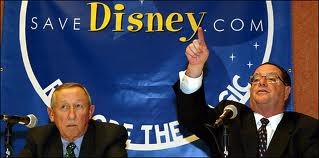
And if you feel blame was correctly placed, ask yourself which of the movie titles mentioned in the last three paragraphs you still watch on disk today.
---
Well, such are trends.
But what we may be responding to today is that the current rush for superhero movies--no, sorry, make that "Superhero UNIVERSES"--at each studio now, is a little disturbing bit more than just a trend. Studios don't see it as a "money trend", they literally see it as the answer to their problems. They look at Marvel announcing a full interconnected slate of release dated "Phase 3 & 4" movie titles into 2019-20, and don't see a studio with a uniquely connected bit of pop-culture, where each story leads into the next. What they see is a studio setting themselves up for life, with pre-greenlit properties the audience already presumably knows, with interconnected cliffhangers to "grab" them into the next. (After all, if you announce a release date, why, that's halfway to the movie actually existing!) How to Make a Studio-Brandname Franchise Without Really Trying, or Particularly Trying at ALL.
And an audience's mutiny against repetitious genre-trope or trend fatigue ain't nothing compared to an audience's mutiny at the suspicion they're being courted by their nostalgia with one hand while being treated like strategic cogs-in-the-wheel of a boardroom spreadsheet by the other. And especially if it seems as if there's more boardroom strategy going into the final product than the entertainment value we poor peasants are supposed to subsidize for the corporate good.
Let's be honest, people: It's not REALLY "Comic-book movies" we hate, is it?...Now, is it?

It's the psychotic mess that was Warner's Batman v. Superman, and the studio's belief that Zack Snyder's dank, doomed fanboy bacchanalias will save the studio for the next seven to eight years. It's Bryan Singer's attempt to "blackmail" Fox into a lifetime career of sausage-ground X-Men sequels--seeing as it worked so well getting "X-Men: Apocalypse" greenlit--by sticking on imaginary post-credit teases to the "next" sequel like some Hollywood Scheherazade to the audience's Sultan. It was Sony refusing to say die on Spiderman, even after they'd already surrendered the character back to his proper owners, where he seemed a lot happier. It was Fox refusing to give their pride an inch on giving the Fantastic Four back to its owners, and...well, you know what happened.
We may not really hate Comic-Book Movies, any more than we wanted to see every print of Disney's 90's animateds burned just because Fox made "Anastasia", or the Pixar headquarters bombed to rubble for the crime of Cars 2, just because another studio's CGI Shrek movies weren't funny and Robert Zemeckis kept making creepy motion-capture.
We don't hate the genre, we just hate the exploitation--We don't hate the barrel, we hate the few bad apples trying to rise to the top of it. We're not angry at a few isolated movies that didn't do as well with the public as they were convinced they would, we're angry at them as symbols of greed, laziness, and out-of-touch stubbornness.
Which are not bad things to be angry at, in principle. But you can't actually HIT an abstract principle, so the bad things happen when we tell ourselves how frustrated we are, and go out looking for some symbolic physical scapegoat we can hit, to feel better...Especially when it probably wasn't all their fault.
And when that happens, it's usually called a "crazed mob". And the innocent tend to be punished instead of the guilty, because we're not particularly interested in the difference.

Some of us, however, take the time to look at brand labels, and stick with just those that actually know how to do this stuff.
You don't have to be a front-line fighter in the DC-vs-Marvel/Warner-vs-Disney Wars to consider one movie better than another, or one studio showing a little more technical competence at it than another, but it does sometimes help to notice a DIFFERENCE.
That's always the first big step.


